The people
The same faces, several times a week
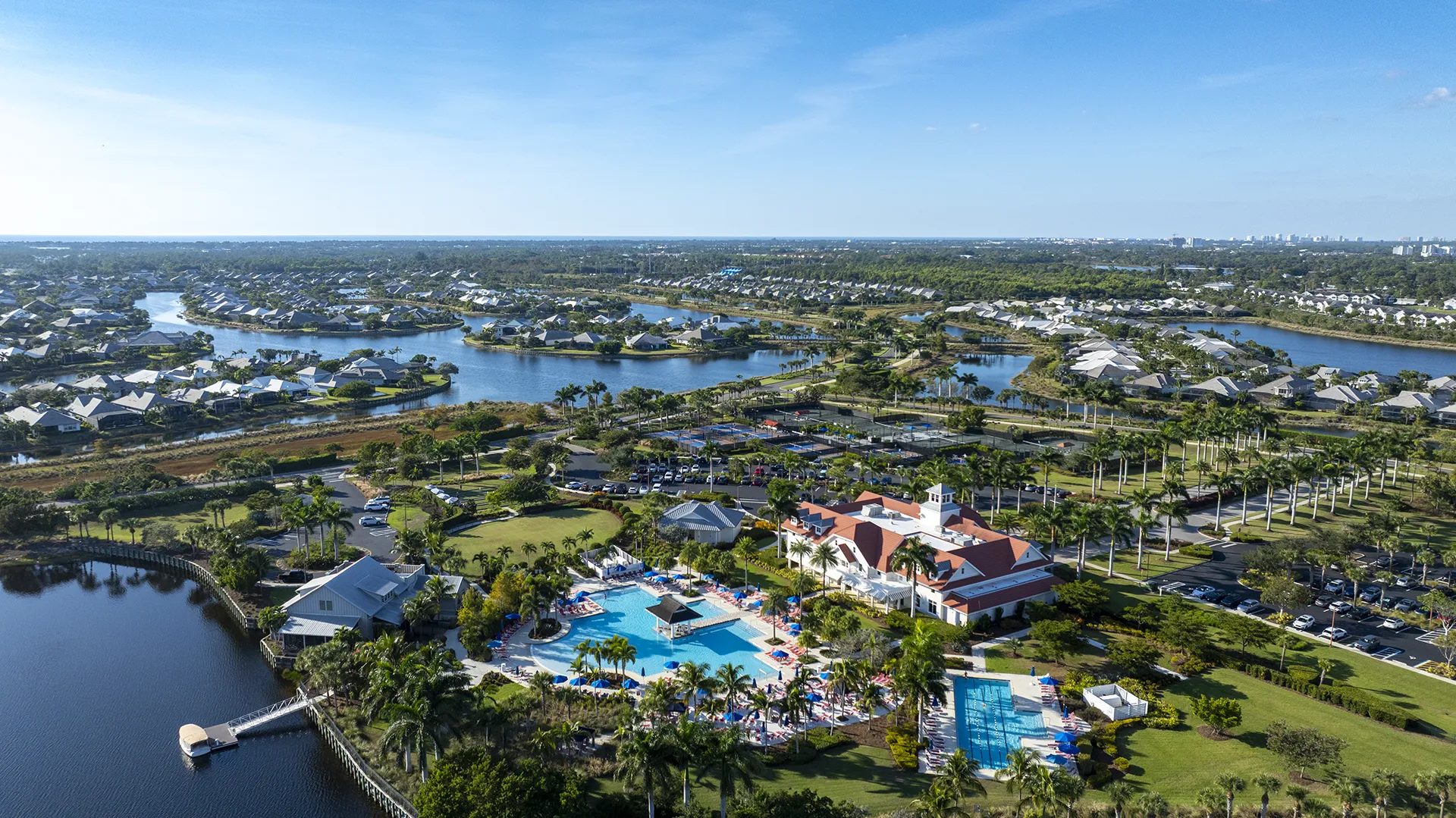
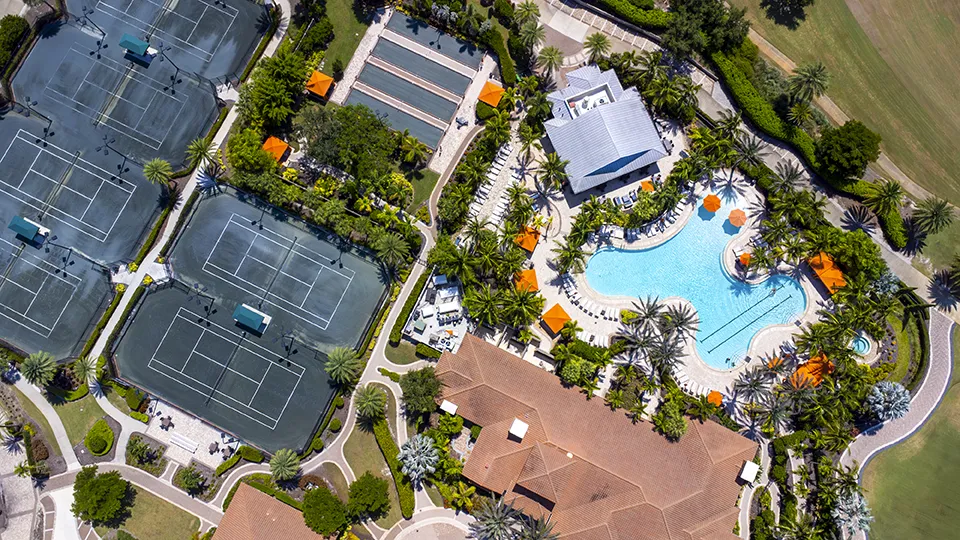
The amenity campus is 12.3 acres, so the courts, the pool and the dining rooms sit a few minutes apart, and a full-time lifestyle staff keeps an events calendar running through them.

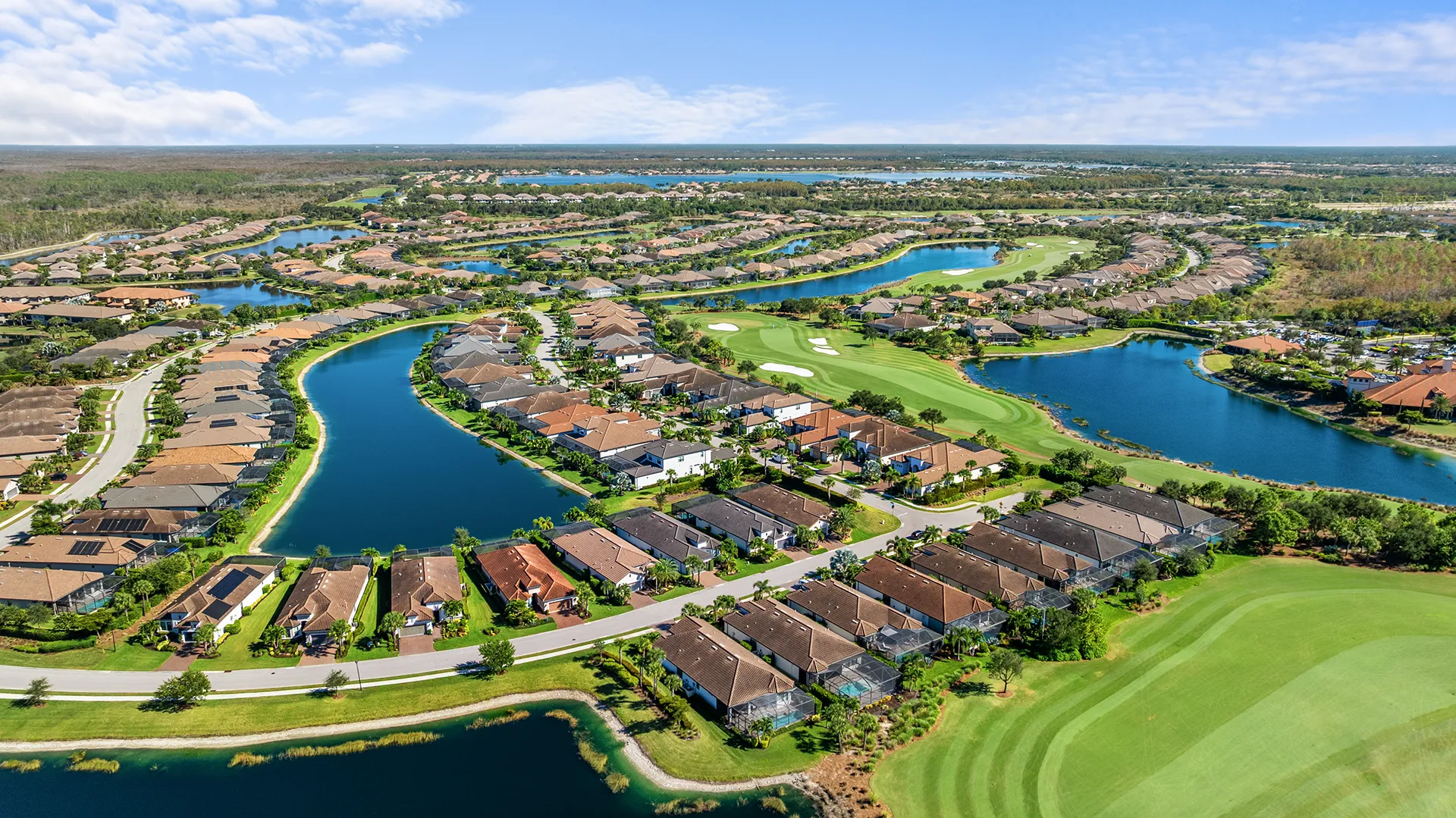
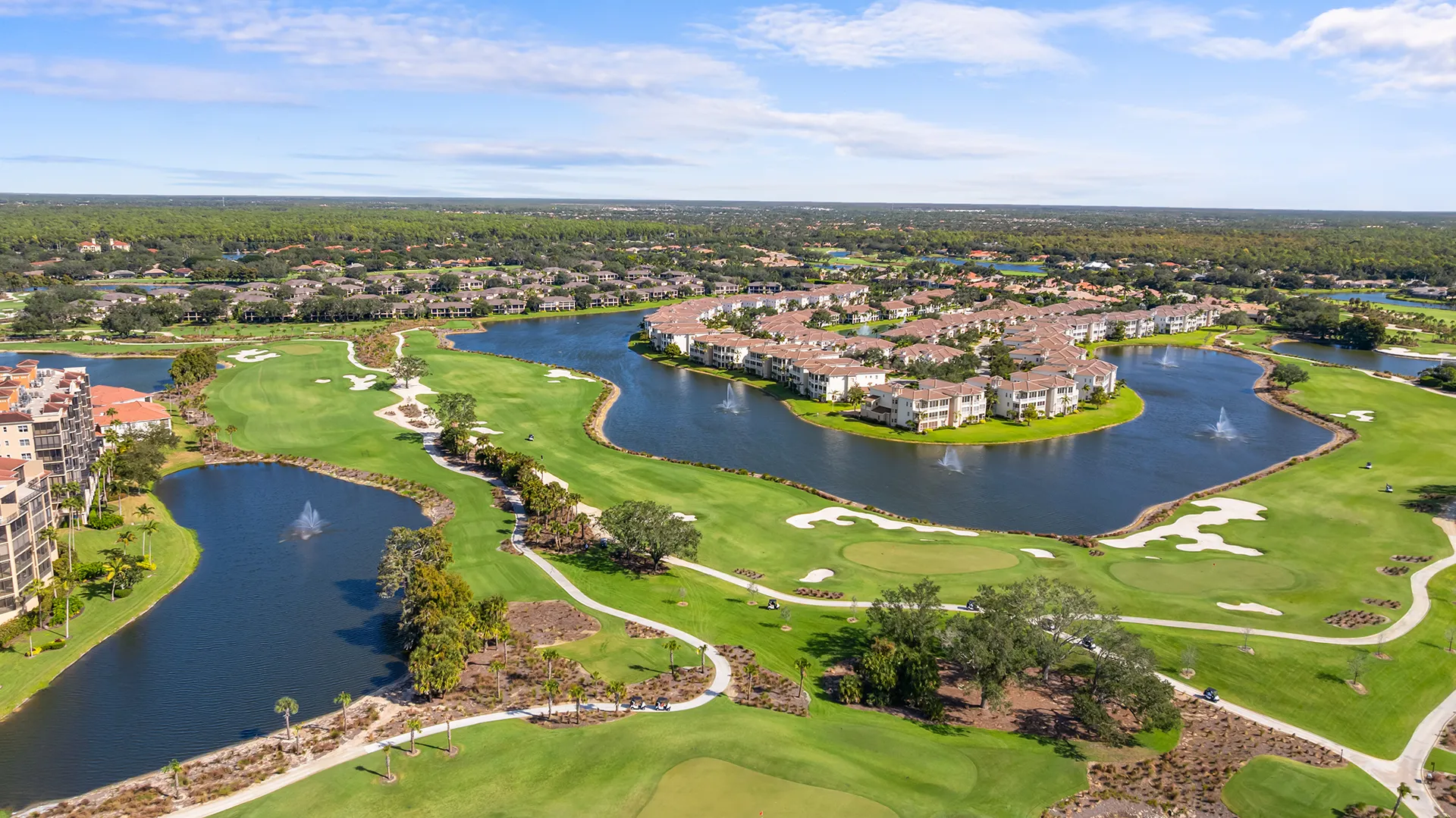
Esplanade Golf and Country Club is a gated, bundled golf community in north Naples, off Immokalee Road. Condos, coach homes and single-family homes share 14 miles of trails and a resort pool.
Southwest Florida › Naples › Esplanade Golf and Country Club
Esplanade sits east of I-75 off Immokalee Road, staffed around the clock, with no age restriction. Taylor Morrison built it out in 2021 across about 1,798 acres.
Esplanade at a glance
Homes
1,184
Golf memberships
839
Built
2015–2022
Every home here includes a club membership. 839 also include golf. The other 345 cannot add it, ever. If you want golf, buy a home that already has it.
Buying here makes you a member. No application, no committee. The club runs the golf course, the Culinary Center, the Wellness Center and the amenity grounds, and every owner pays toward all of it.
The people
The amenity campus is 12.3 acres, so the courts, the pool and the dining rooms sit a few minutes apart, and a full-time lifestyle staff keeps an events calendar running through them.
The setting
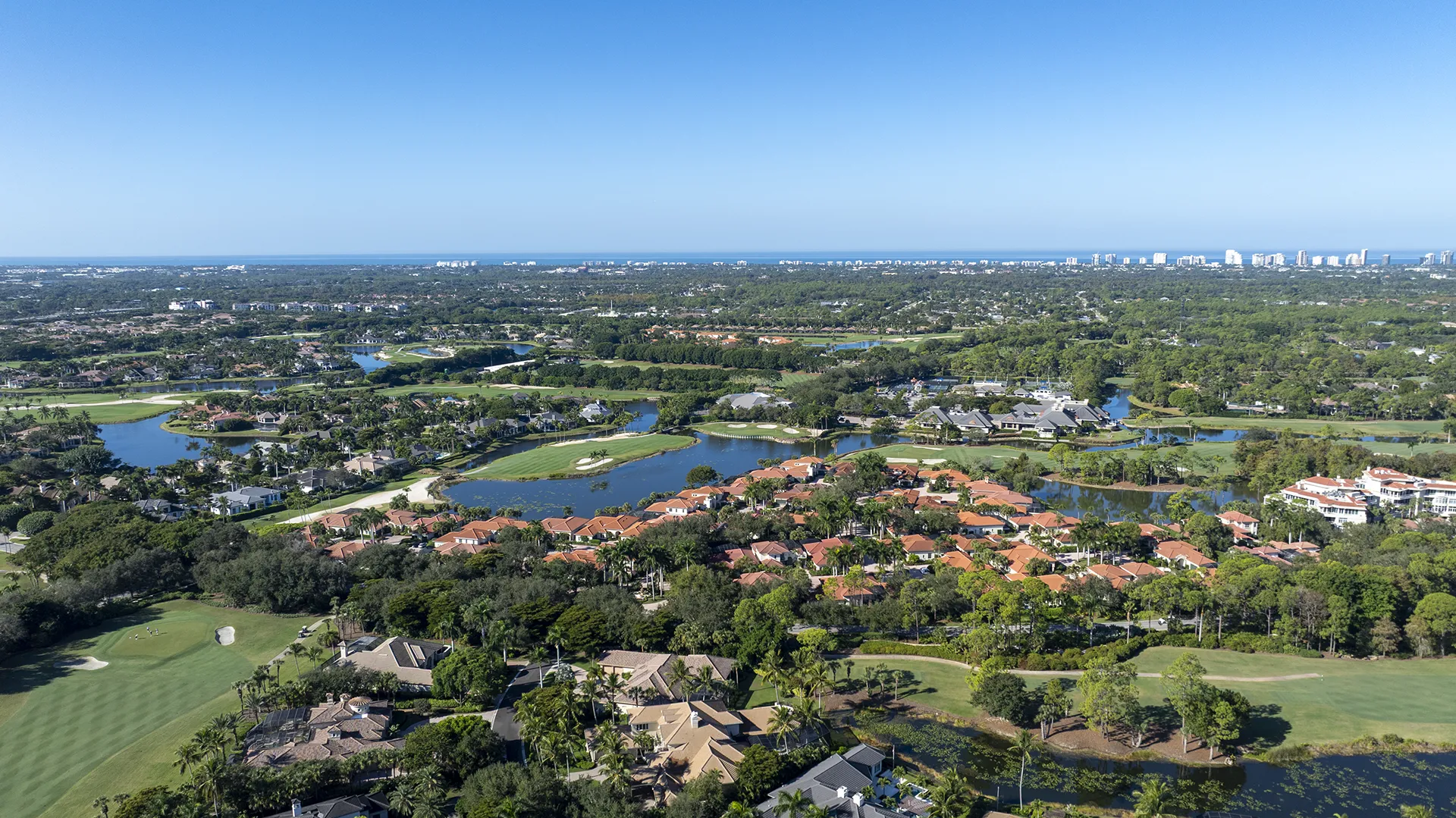
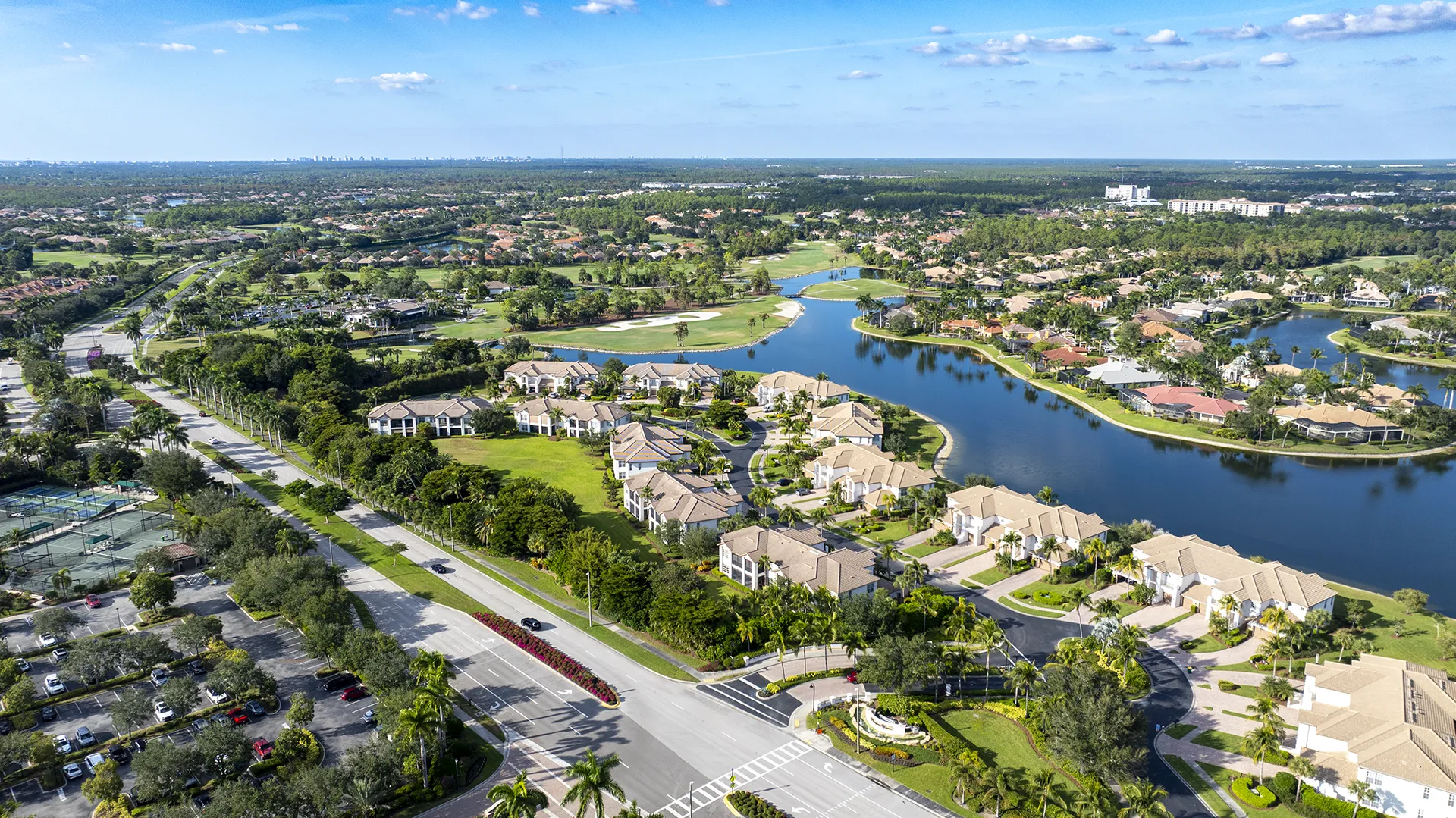
Fourteen miles of biking and walking trails run through the community, and dog owners get three dog parks. The club counts about 1,798 acres, roughly 1,000 of them preserve and wetlands, and more than 170 acres of lakes. A little over half the community is not built on, which is why so many homes look at water or open space.
The dining
The Culinary Center holds the dining rooms, indoors and out, on four settings from poolside casual up to an upscale room, each with its own dress code. Every resident carries a $750 annual food minimum, food only, which is money spent at the club rather than a fee.
The amenity campus sits on 12.3 acres of its own. Every owner uses all of it. The one thing that is not shared on equal terms is the golf course.
12.3
acres of amenity campus
Koquina
Sand Spa & Salon, beside the fitness center and movement studio
4
dining settings, each with its own dress code
5,400
square feet of resort pool, with a spa beside it
14
miles of biking and walking trails
3
dog parks
1,000
acres of preserve and wetland
24-hour
staffed gate
The course is the exception. A golf membership books tee times in advance. A club membership plays at guest rates and cannot. Which one you have came with the house. Compare the two.
See the newest active Esplanade Golf and Country Club listings from the MLS. Use the button below the homes to see them all and filter by price, home type, beds, or neighborhood. New to the area? Our Southwest Florida home buying guide walks you through each step.
Want these in your inbox? A free account saves your search and emails you when a new Esplanade home hits the market.
Enter a Southwest Florida address to see real drive times to the places that matter: groceries, dining, healthcare, boating, golf, and the airport.
Loading the map…
Comparing two Esplanade homes? Two homes on the same street can come with different memberships, different lot widths and different district bonds. We read all three before you write an offer.
What changed
More Esplanade homes sold over the past 12 months than the year before. The single-family median rose about 2%: 52 sold at a median of $1,755,000, against 34 at $1,720,000. Coach homes sold 33 times at a median of $688,500, down about 14% from $797,000. On October 1, ten homes were under contract, up from eight a month earlier.
Median sold price, past 12 months
2% higher than the year before ($1,720,000)
Median sold price, past 12 months
14% lower than the year before ($797,000)
Home types follow the MLS building categories, with filing errors corrected where the listing shows a different home type. The MLS files coach homes in its condo categories.
Homes that sold in the past 12 months, split by whether an earlier listing had failed in the year before. Days for relisted homes add up every listing; days for first-try sales count only the listing that sold.
| Home type | Sold on the first try | Relisted before selling | Relisted homes, median amount below their last listed price |
|---|---|---|---|
| Single-family homes | 46 salesmedian $1,832,718, 31 days | 6 salesmedian $1,721,250, 184 days in all | $103,200about 6% less |
| Coach homes | 27 salesmedian $688,500, 76 days | 6 salesmedian $663,500, 416 days in all | $56,000about 7% less |
Before you set a first asking price, let us compare your home with recent sales of similar homes.
Over the 12 months ending September 2026, the single-family median was $1,755,000, up from $1,720,000. The coach home median was $688,500, down from $797,000.
Single-family homes$1,720,000 in Sep 2025 · $1,755,000 in Sep 2026
Coach homes$797,000 in Sep 2025 · $688,500 in Sep 2026
Each point shows the median sale price for the 12 months ending that month, so neighboring points share most of their sales. The curved lines connect those values.
| 12 months ending | Single-family homes: sales | Median | Price per sq ft | Coach homes: sales | Median | Price per sq ft |
|---|---|---|---|---|---|---|
| Sep 2025 | 34 | $1,720,000 | $704 | 32 | $797,000 | $391 |
| Oct 2025 | 35 | $1,740,000 | $703 | 36 | $775,000 | $361 |
| Nov 2025 | 37 | $1,770,000 | $703 | 37 | $775,000 | $358 |
| Dec 2025 | 40 | $1,700,000 | $703 | 35 | $775,000 | $358 |
| Jan 2026 | 41 | $1,697,500 | $703 | 32 | $775,000 | $357 |
| Feb 2026 | 44 | $1,698,750 | $703 | 26 | $754,900 | $352 |
| Mar 2026 | 44 | $1,759,500 | $703 | 28 | $754,900 | $361 |
| Apr 2026 | 46 | $1,762,000 | $702 | 27 | $734,800 | $364 |
| May 2026 | 49 | $1,740,000 | $698 | 28 | $742,400 | $366 |
| Jun 2026 | 49 | $1,740,000 | $695 | 32 | $695,000 | $351 |
| Jul 2026 | 50 | $1,719,950 | $695 | 32 | $697,500 | $353 |
| Aug 2026 | 53 | $1,745,000 | $698 | 31 | $690,000 | $343 |
| Sep 2026 | 52 | $1,755,000 | $699 | 33 | $688,500 | $331 |
Single-family homes sold at a median of $1,755,000 over the 12 months ending October 1, 2026, up about 2% from $1,720,000 the year before, while sales rose from 34 to 52. Median price per square foot was about the same, $699 against $704, so compare homes of similar size as well as total price. They sold from $1,110,000 to $3,700,000.
Coach homes sold at a median of $688,500, down about 14% from $797,000 the year before, on 33 sales against 32. Median price per square foot also fell, from $391 to $331. They sold from $385,000 to $935,000, so compare units of similar size and setting.
Compare a home with sales of the same type and a similar size. The single-family median was $1,066,500 above the coach home median over the past 12 months, and association costs differ by home type too.
Five of the 14 homes for sale on October 1 had an earlier listing end without a sale in the past 12 months.
Six single-family homes were for sale on October 1, about a month and a half of sales at the past year’s pace. Two of the six have a prior expired, withdrawn, or terminated record in the past 12 months, and two have been on their current listing 180 days or more. Eight coach homes were for sale, about three months of sales, and three of them had been listed before.
Single-family homes took a median of 41 days from listing to accepted contract on the listing that sold, and closed at a median 96.1% of their final asking price. Coach homes took a median of 70 days and closed at 97.2% of their final asking price. Those percentages use the last asking price after any price cuts. On October 1, ten homes were under contract, five single-family homes and five coach homes, up from eight on September 1.
Six single-family homes sold in the past year after an earlier listing expired, was withdrawn, or was terminated. They sold a median of $103,200 below their last listed price, about 6% less, and spent a median of 184 days on the market across all their listings. Single-family homes that sold on the first try took a median of about 31 days.
Six coach homes sold after a relist, a median of $56,000 below their last listed price, about 7% less, after a median of about 416 days on the market across all their listings. Coach homes that sold on the first try took a median of 76 days. Two of those six took three or more listings to sell.
Showing the latest months. Swipe sideways or use the arrows to see all 24 months.
Each bar is one month of closed sales. Monthly counts in a community this size move around a lot, so the 12-month figures in the cards are the steadier read.
| Month | Single-family homes | Coach homes | All homes |
|---|---|---|---|
| Oct 2024 | 3 | 1 | 4 |
| Nov 2024 | 2 | 0 | 2 |
| Dec 2024 | 2 | 4 | 6 |
| Jan 2025 | 4 | 3 | 7 |
| Feb 2025 | 4 | 7 | 11 |
| Mar 2025 | 4 | 2 | 6 |
| Apr 2025 | 3 | 3 | 6 |
| May 2025 | 1 | 1 | 2 |
| Jun 2025 | 4 | 4 | 8 |
| Jul 2025 | 2 | 4 | 6 |
| Aug 2025 | 1 | 2 | 3 |
| Sep 2025 | 4 | 1 | 5 |
| Oct 2025 | 4 | 5 | 9 |
| Nov 2025 | 4 | 1 | 5 |
| Dec 2025 | 5 | 2 | 7 |
| Jan 2026 | 5 | 0 | 5 |
| Feb 2026 | 7 | 1 | 8 |
| Mar 2026 | 4 | 4 | 8 |
| Apr 2026 | 5 | 2 | 7 |
| May 2026 | 4 | 2 | 6 |
| Jun 2026 | 4 | 8 | 12 |
| Jul 2026 | 3 | 4 | 7 |
| Aug 2026 | 4 | 1 | 5 |
| Sep 2026 | 3 | 3 | 6 |
Six homes sold in September, at a median of 94.6% of their first asking price.
What could your Esplanade home sell for today?
Your neighborhood, your home’s condition and today’s competition all matter. We compare your home with recent sales nearby and show you what buyers can choose from right now.
Every figure comes from Florida Gulf Coast MLS records. The full method is on our Southwest Florida market methodology page.
Figures from Florida Gulf Coast MLS records available as of October 10, 2026. See the full Naples housing market update →
Recent Esplanade closings show the prices buyers actually agreed to pay. Compare the same neighborhood, home type, size, view, and condition before treating a sale as a useful comparable. Selling? .
This is the first thing to establish about any home here, because it cannot be changed after closing and it is worth thousands of dollars a year. It is attached to the deed, so it transfers with the house. Both are full club and sports memberships. Only one of them books a tee time.
Homes carrying golf
839 of 1,184
The club’s governing documents cap golf memberships at 850, and 839 are assessed for 2026. No waitlist, and no upgrade path.
839 homes. Golf comes with the house.
A Golf home costs $4,664.18 a year more to own than an otherwise identical Club home. That is the price of the tee-time window, and it is charged whether you play or not.
345 homes. Everything except advance tee times.
Some paperwork calls this a social or Social/Club membership. The club’s own community overview calls it a Club membership. Same thing.
For a seller, this narrows the comparable set. A three-bedroom coach home with golf and a three-bedroom coach home without it are not the same listing. Confirm membership before choosing comparable sales. The comparables that matter are the ones on your side of the line.
Cost of ownership
Use the address lookup for the home’s fee profile and district charge, and confirm its Golf or Club membership in writing. If you are still comparing, choose the home yourself.
1Membership
Confirm which membership the home carries. Selecting a membership here does not change it. The membership is attached to the home and cannot be upgraded later.
Enter an Esplanade address for its home type, fee profile and exact district charge. You can also enter a quarterly master fee from a listing.
2Home typeSingle family pays a landscape assessment by lot width. Coach and condo homes pay a neighborhood association.
3Lot widthOnly single family homes have one.
If you do not know the width, enter the quarterly master fee from the listing above.
Master assessment
A single family home on a 52 foot lot, with a Golf membership
| Food and beverage minimum | $750 a year |
|---|---|
| Club Improvement Project | $452 a quarter |
| Coach Homes I on Montelanico | $1,633.00 a quarter |
| Flow Way CDD | On the tax bill |
The full schedule remains visible when JavaScript is unavailable. Neighborhood association and district charges sit outside these figures.
| Home | Membership | Club | Reserve | Golf | Landscape assessment | A quarter | A year at current rates |
|---|---|---|---|---|---|---|---|
| Coach or condo | Club | $6,224.46 | $1,913.98 | None | None | $2,034.62 | $8,138.44 |
| Coach or condo | Golf | $6,224.46 | $1,913.98 | $4,664.18 | None | $3,200.67 | $12,802.62 |
| 52 foot lot | Club | $6,224.46 | $1,913.98 | None | $2,169.34 | $2,576.96 | $10,307.78 |
| 52 foot lot | Golf | $6,224.46 | $1,913.98 | $4,664.18 | $2,169.34 | $3,743.01 | $14,971.96 |
| 62 foot lot | Club | $6,224.46 | $1,913.98 | None | $2,268.63 | $2,601.78 | $10,407.07 |
| 62 foot lot | Golf | $6,224.46 | $1,913.98 | $4,664.18 | $2,268.63 | $3,767.83 | $15,071.25 |
| 76 foot lot | Club | $6,224.46 | $1,913.98 | None | $2,524.35 | $2,665.71 | $10,662.79 |
| 76 foot lot | Golf | $6,224.46 | $1,913.98 | $4,664.18 | $2,524.35 | $3,831.76 | $15,326.97 |
| 90 foot lot | Club | $6,224.46 | $1,913.98 | None | $2,926.23 | $2,766.18 | $11,064.67 |
| 90 foot lot | Golf | $6,224.46 | $1,913.98 | $4,664.18 | $2,926.23 | $3,932.23 | $15,728.85 |
| 100 foot lot | Club | $6,224.46 | $1,913.98 | None | $3,217.89 | $2,839.09 | $11,356.33 |
| 100 foot lot | Golf | $6,224.46 | $1,913.98 | $4,664.18 | $3,217.89 | $4,005.14 | $16,020.51 |
Master assessment figures come from the club’s 2026 Member Assessments schedule. District figures come from the Flow Way CDD adopted budget. Neighborhood association amounts are the latest figures available and should be confirmed against the association’s own budget.
Verify the exact home. Before you make an offer, we confirm the membership, lot width or association, remaining improvement assessment, district charge, current estoppel and governing documents.
Have a home in mind? Send us the address and we will verify the costs that belong to it.
Talk to a buyer agentThirty-day minimum, a set number of leases a year, and paperwork to your neighborhood association four weeks ahead. The part that surprises owners is what happens to their own club access.
Minimum lease
30 days
Coach and condo owners may lease five times a year. Single family owners may lease four.
The lease
Thirty days or longer. Five leases a year for a coach or condo home, four for a single family home.
The paperwork
To the neighborhood association at least four weeks before the lease starts: a rental application, a copy of the lease, a non-refundable transfer fee and a background check fee. A renewal needs two weeks.
The amenity transfer
Your club access transfers to your tenant for the term. They buy their own access cards and give them up when the lease ends.
What changes for the owner
While a tenant is in the home you do not have club access. If you were planning to rent the house out and still use the club, that is not how it works here.
Your association can be stricter. Coach and condo homes answer to their own condominium association as well as the master, and where the two conflict the master declaration wins. We read the documents for your specific building before you count on a rental plan.
We manage properties in Naples. If you are weighing a rental at Esplanade, we can walk you through the association paperwork, the amenity transfer and what the home realistically rents for.
Esplanade is a bundled golf community in north Naples, developed by Taylor Morrison and built out in 2021. Buying a home here makes you a member of the club automatically, with no application to fill out and no committee to satisfy. The club runs the golf course, the Culinary Center, the Wellness Center and the amenity grounds, and every owner pays toward all of it.
What varies is golf. Of the 1,184 homes, 839 come with a golf membership. The rest have a Club membership, with the same pools, courts, restaurants, fitness center and spa and the course at guest rates, but no advance tee times. A Club home cannot be upgraded to Golf, so the only way to hold a golf membership here is to buy a home that already has one.
Esplanade has two kinds of home, and the difference runs deeper than the floor plan.
Coach homes and condominiums. 416 of the 1,184. These sit in their own condominium associations, each with its own budget and its own quarterly fee on top of the club’s. The associations are Garden Homes I and II on Pocida, Coach Homes I, II and III on Montelanico, Bellano I and II, and Benvenuto I. Cambridge Management runs Montelanico and Bellano. Sandcastle runs Pocida and Benvenuto. The fee differs by association, so it is worth knowing which one a home sits in.
Single family homes. 768 of the 1,184. These answer only to the master association, so no second fee applies. Instead they pay a grounds assessment for lawn care, and it scales to how wide the lot is. Five widths are used: 52 feet, 62 feet, 76 feet, 90 feet and 100 feet. Most are on the narrower end. 331 homes sit on 52 foot lots and 238 on 62 foot lots, while only 42 homes across the whole community sit on 90 or 100 foot lots.
If you are looking at a listing and cannot tell which lot width it sits on, the quarterly fee gives it away. The cost tool on this page will decode it for you, and it will name the association for a coach or condo home.
Esplanade is a resort style community rather than a quiet one. The pool has lap lanes and a bar. Organized activities run through the year, with a full time lifestyle staff and a calendar of events.
The layout puts water and golf in front of a lot of homes. The community covers about 1,798 acres, roughly 1,000 of it preserve, wetland and walking trails, with more than 170 acres of lakes. A little over half the property is not built on, which is why lake and course views here are common rather than rare.
The club runs its amenities from two centers. The Culinary Center holds the dining rooms, indoors and out, on four different settings from poolside casual up to an upscale room, each with its own dress code. The Wellness Center holds the fitness center and movement studio, the spa treatment rooms of the Koquina Sand Spa and Salon, and the resort pool and spa, with the Bahama Bar beside the water. Around them are the sports courts, the trails, the three dog parks and the course.
A few house rules are worth knowing before you visit. Pets are not allowed inside club facilities, though support and service animals are accommodated under fair housing rules. The golf course dress code is strict: collared shirts tucked in, tailored shorts no more than three inches above the knee, and no denim of any kind or color. Buyers coming from public golf are often surprised by that one.
Check a Naples address’s flood zone
Flood zone and insurance costs can vary from one block to the next in Naples. Look up the FEMA flood zone for any address in seconds, so you know the zone before you get an insurance quote and make an offer.
Open the flood zone lookup →Moving from up north? Compare your winter with Southwest Florida on our Naples page. Our Florida relocation tax calculator compares what you pay now against what you would pay here, and our cost of owning a home guide puts association fees beside property taxes, insurance and the other yearly costs.
Yes, for homes that carry a Golf membership. Of the 1,184 homes, 839 include golf.
The other 345 have a Club membership, with access to the course at guest rates but no advance tee-time booking. Both use the same pools, courts, restaurants, fitness center and spa. The difference is the tee sheet.
No. A Club home cannot be upgraded to a Golf home.
Not by paying and not by waiting. The only way to get golf here is to buy a home that already has it. Owners without it can still play the course at guest rates, but they cannot book advance tee times. The club’s governing documents cap golf memberships at 850 and 839 are assessed for 2026, so the ceiling is close.
It depends on the membership, the home type and, for a single family home, the lot width.
In 2026 a coach or condo home with a Club membership pays $2,034.62 a quarter to the club. A single family home on a 52 foot lot with a golf membership pays $3,743.01. Coach and condo homes also pay a separate neighborhood association fee. The cost tool on this page covers every combination.
It is the Club Improvement Project assessment, running through the end of 2030.
The full amount is $8,050. The board passed it on November 13, 2025, and it funds a rebuilt Bahama Bar, a larger outdoor bar, an expanded practice range and a four court indoor pickleball complex. A seller can pay it off at closing, and some do, so ask whether the balance is settled before you write an offer.
Yes, the Flow Way Community Development District.
Every home pays $1,845 a year for district operations on the tax bill. Bond debt varies by construction phase and 311 of the 1,184 homes carry none, so it has to be checked property by property. Enter an address in the cost tool on this page and it will give you the exact district charge for that parcel.
$15,000 at closing, called the Working Fund Capital Contribution.
It is due on any purchase. The 50 percent rebate that appears on some paperwork is only for owners moving from one Esplanade home to another, and only if they sell the old home within twelve months and both homes were their personal residence. A buyer coming from outside pays the full $15,000.
Yes, with a thirty day minimum.
Coach and condo owners can lease five times a year, single family owners four. Paperwork goes to the neighborhood association at least four weeks ahead. During the lease your amenity access transfers to your tenant, so you cannot use the club while a tenant is in the home.
No. The community has no age restriction.
Year round residents, seasonal owners and tenants all live here, and the community was built out by Taylor Morrison between 2015 and 2022 without an age restriction.
It is the same thing as a Club membership.
Some paperwork calls the non golf membership a social or Social/Club membership. The club’s own community overview calls it a Club membership. They mean a full club and sports membership, with golf available at guest rates and no advance tee times.
The usual Collier County seller costs, plus any Club Improvement Project balance you agree to pay off at closing.
Florida’s documentary stamp tax is $0.70 per $100 of the sale price, $4,200 on a $600,000 home, and the seller customarily pays it. In Collier County the buyer customarily pays for the owner’s title policy. At closing you credit the buyer for property taxes for the part of the year you owned the home, pay any association dues owed through closing, and usually pay for the estoppel letter. The Club Improvement Project runs $452 a quarter, and some sellers pay off the remaining balance at closing while others leave it for the buyer to keep paying, so it is settled in the contract. The $15,000 Working Fund Capital Contribution is charged to the buyer, not the seller. Agent compensation is negotiable.
Flood zones change from one block to the next, so the only answer that counts is the one for that exact address.
The zone affects both insurance cost and lender requirements, and two homes on the same street can sit in different ones. Check the FEMA flood zone for the address first, then get a current insurance quote before you make an offer.
Look up any address Southwest Florida flood zone lookupComparing options nearby? Jump to another Naples community, or see the whole city market.
Compare the right Esplanade homes.
We will tell you whether a home comes with a Golf or a Club membership, what the club bills for it, which association it sits in or how wide its lot is, what the district charges that specific parcel, and whether the $8,050 improvement assessment is settled, before you write an offer.
Price your Esplanade home within the right comparison set.
A home with golf and one without are not each other’s comparables. We narrow the analysis by membership, home type, association or lot width, view, condition and recent closings, so the asking price rests on sales that actually match your home.
We research the details that matter when you are comparing Southwest Florida homes and communities, from current market activity and what a home costs to own, to the rules and fees that can change the decision.
Preferred SourcesGoogle Search
See more from Worthington in Top Stories, and spot our links more easily in Google’s AI answers.
Worthington Realty worthingtonrealty.comPreferences are managed by Google.
New listings, recent sales and what changed, once a month.
No account needed. Unsubscribe any time.
Get monthly market updates
Free · Two quick steps · Unsubscribe anytime
What’s Your Esplanade Home Worth?
Golf homes and Club homes trade apart, so they price apart. Start with your address. A Worthington agent follows up with a pricing range, the comparable sales behind it, and the next steps that fit your timing.
Your information stays with Worthington Realty and is never sold or shared.
Talk to an Esplanade agent
Tell us what you are looking for and a Worthington agent follows up with the homes worth seeing, whether each one comes with golf, what it actually costs to own, and the recent closings that price it.
Your information stays with Worthington Realty and is never sold or shared.
Get new Esplanade listings by email
A free account saves your searches and emails you when a home comes on the market at Esplanade. No obligation, and we do not require it to browse.
Your information stays with Worthington Realty and is never sold or shared.
Worthington Realty
Talk to an Agent
Buying, selling, renting or just starting to think about it. Tell us what’s on your mind and the right person on our team will reach out.
Prefer to call? (239) 437-3334, Monday to Friday, 9 a.m. to 5 p.m.