

Southwest Florida homeowner guide
Hurricane Preparedness Guide for Southwest Florida Homeowners
Southwest Florida hurricane checklist with links to official Lee and Collier County evacuation zones, shelters, and ways to prepare your home.
Hurricane season
Southwest Florida hurricane preparation checklist
Hurricane season runs from June 1 through November 30. This guide gathers the official Lee and Collier County resources, a checklist for each stage of a storm, and links to our detailed guides on storm shutters, flooding, generators, pool cages and documents. It applies whether you live in Fort Myers, Cape Coral, Estero, Bonita Springs or Naples.
Key Takeaways
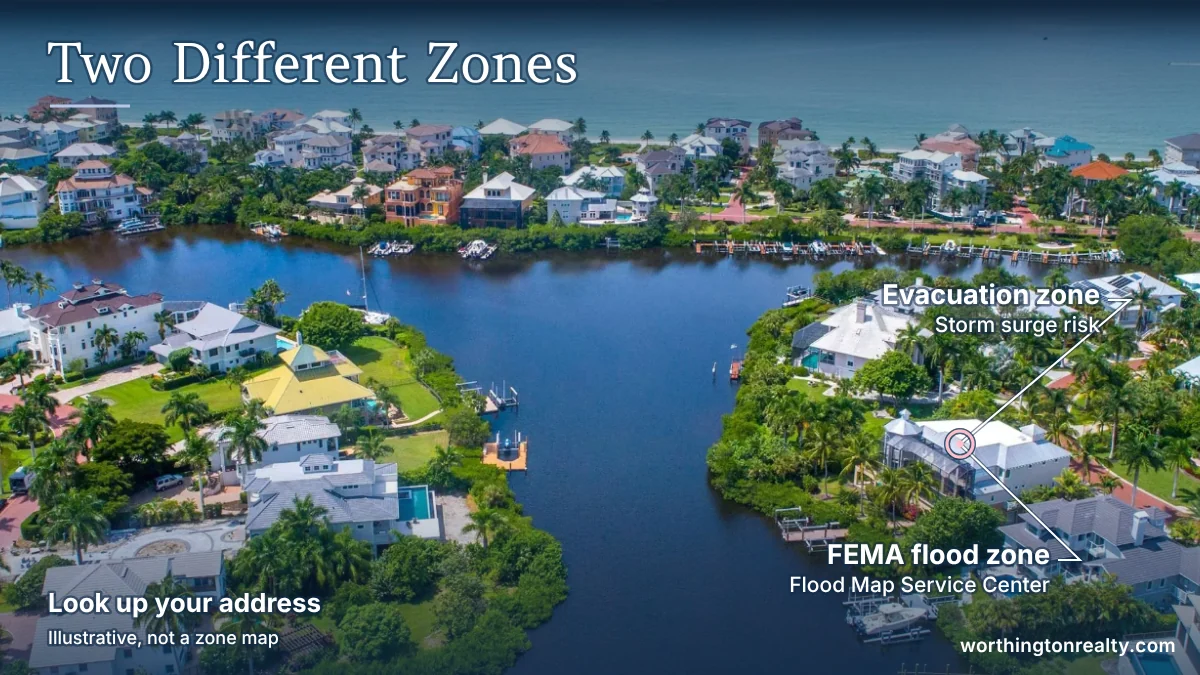
- Look up your evacuation zone by address. Lee County uses zones A through E, and evacuation zones are separate from FEMA flood zones.
- Review your insurance before a storm threatens: wind coverage, the hurricane deductible and flood coverage. Standard homeowners policies generally exclude flooding.
- Start preparing when your area is threatened, follow local instructions, and finish before tropical-storm-force winds arrive.
- After the storm, photograph damage before cleanup and hire only licensed contractors.
- If you plan to sell, keep the permits, inspection reports and repair records for any storm work.
Start here
Find your evacuation zone, shelters and emergency alerts
County tools for evacuation zones, alerts and shelters, plus the lookups that work for any address.
Official county tools
Lee County: Fort Myers, Cape Coral, Estero, Bonita Springs
- Find My Evacuation Zone look up your evacuation zone by address.
- AlertLee sign up for county emergency notifications.
- Lee County Hurricane Preparation Guide shelters, pets, bridges, debris pickup and storm updates.
- Lee County advises drivers to stay off bridges and their approaches once sustained winds reach 40 mph.
Official county tools
Collier County: Naples
- Collier County Emergency Management evacuation zone lookup, alerts and preparation.
- Collier County Emergency Assistance shelters, shelter rules and pets.
- Florida’s statewide Know Your Zone map also covers Collier addresses.
Flood maps, weather information and utility outages
Flood zone: the FEMA Flood Map Service Center or our Southwest Florida Flood Zone Lookup.
Forecasts, watches and warnings: the National Hurricane Center.
Your electric provider’s outage page. Check your bill to see whether you’re served by FPL or LCEC, since the service areas don’t follow city lines.
Go deeper
Prepare your home for hurricane season
Each guide covers one part of protecting your home, with Southwest Florida rules and records.


Stage 01
What to do before hurricane season
- Review your homeowners policy for wind coverage, the hurricane deductible and any exclusions. Ask about flood coverage separately. NFIP flood policies usually take 30 days to start, with a few exceptions (FloodSmart).
- Photograph and video every room and your belongings, and save copies in the cloud. Our hurricane documents guide lists what to keep.
- Check your opening protection: shutters, impact windows and the garage door. See our storm shutters guide.
- Inspect the pool cage and have trees trimmed early, while yard waste pickup runs on its normal schedule. See our pool cage guide.
- Service your generator on the manufacturer’s schedule. See our generator safety guide.
- Learn your home’s flood risk and the steps that fit it. See our flood protection guide.
- Plan two evacuation routes and a place to go, including for pets, and choose an out-of-area contact for the family.
- Build a supply kit with at least seven days of supplies: one gallon of water per person per day, food that needs no cooking, medications, pet supplies, flashlights, batteries, a battery or hand-crank radio, phone chargers and cash.
- If you need help evacuating or rely on medical equipment, register early with the Lee County Special Medical Needs Program or Collier County’s Special Needs Program. Lee County may not process applications once a storm is close.
- If the home sits empty in summer, arrange for someone to prepare it before a storm and check on it after.
Stage 02
What to do when a hurricane threatens your area
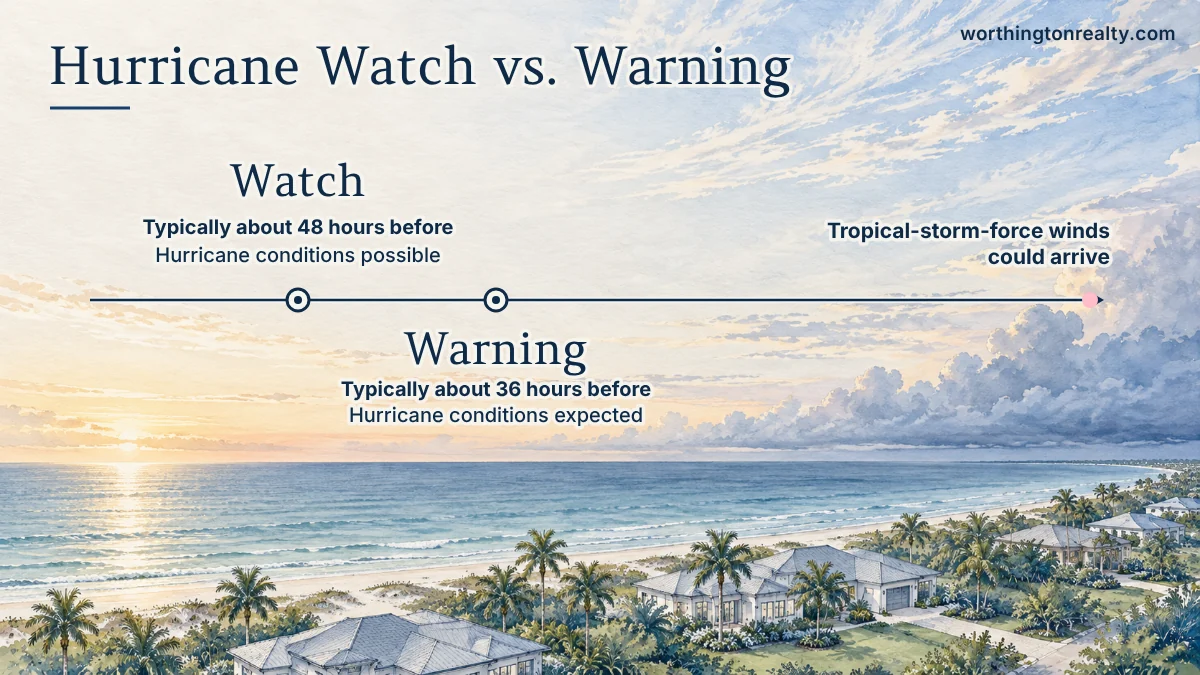
The National Hurricane Center typically issues a hurricane watch about 48 hours before tropical-storm-force winds could arrive and a hurricane warning about 36 hours before. Those winds arrive well ahead of the storm’s center. Start preparing when your area is threatened, follow local instructions, and finish before those winds arrive.
- Follow evacuation orders for your zone. If you live in a mobile or manufactured home, arrange a safer place to shelter before tropical-storm or hurricane winds arrive, even if your address is outside an evacuation zone.
- Put up shutters or other opening protection. Taping windows does not protect them.
- Bring patio furniture, potted plants and anything else the wind can pick up inside. Secure gas grills outdoors, close the propane tank’s valve and secure the tank upright outdoors, and never store propane tanks inside the home, garage or an enclosed shed.
- Fill the car’s gas tank, get cash, and charge phones and battery packs.
- Turn the refrigerator and freezer to their coldest settings and keep the doors closed.
- Fill containers with drinking water. Water in the bathtub can be used for flushing.
- Put your document go bag and medications where you can grab them.
- Finish outdoor work before conditions turn dangerous, and stay off bridges once sustained winds reach 40 mph.
Stage 03
How to stay safe during a hurricane
- Stay inside, in an interior room away from windows.
- The calm of the eye is temporary. Stay put until officials say it’s safe to go out.
- Use flashlights instead of candles.
- Get updates from the National Hurricane Center and your county’s emergency management office.
- Never run a portable generator indoors, in a garage or on a lanai.
Stage 04
What to do after a hurricane: damage, claims and repairs

- Wait for the all-clear before going out. Stay away from downed power lines and standing water, which can hide debris and carry electrical current.
- If you smell gas or suspect a leak, leave right away, avoid light switches and flames, and contact the gas company or 911 from a safe distance.
- When it’s safe, photograph and video the damage before cleanup. Make temporary repairs needed to prevent further damage, document that work and keep every receipt. Check with your insurer before permanent repairs.
- Report claims to your insurer promptly and keep a log of each conversation.
- If your county is designated for FEMA individual assistance, check your eligibility and apply at DisasterAssistance.gov. FEMA can provide grants for some needs. SBA disaster loans are a separate option and must be repaid.
- A closed refrigerator keeps food safe for about 4 hours without power, a full freezer about 48 hours and a half-full freezer about 24 hours (FoodSafety.gov). When in doubt, throw it out.
- Hire licensed, insured contractors. Check the license with the Florida Department of Business and Professional Regulation, get a written scope of work, avoid paying in full upfront, and make sure permits are pulled.
- Run portable generators outside, at least 20 feet from your home and other buildings, with the exhaust pointed away from doors, windows and vents. Use battery-powered or battery-backup carbon monoxide alarms inside.
Selling your home
What storm records should you keep before selling?
Buyers, inspectors and insurers often ask how the home has come through storms and what was done about any damage. Keep these together in one folder:
- Permits and final inspections for shutters, impact windows, the roof, a generator and any storm repairs
- Your most recent wind mitigation report and the product approvals for your opening protection
- Insurance claims and the repairs that followed, with invoices and photos
- Your flood history. Florida sellers must give buyers a flood disclosure at or before the contract is signed, covering flooding that damaged the property while they owned it, flood insurance claims and any flood assistance received (section 689.302, Florida Statutes).
Our Seller FAQs walk through the rest of the disclosure process, and a free home valuation is a good first step if you’re weighing a sale.
Buying a home
Buying a Southwest Florida home: flood zones, insurance and storm records
Thinking about buying a home in Southwest Florida and wondering how it has handled storms? A Worthington agent can help you look into its flood zone and available elevation certificates, permits and storm repair records before you make an offer.
Talk to an Agent About BuyingAn agent will reach out personally within one business day. No pressure, just answers.
- Look up the address’s evacuation zone and flood zone before you make an offer.
- Get insurance quotes, including flood, during the inspection period.
- Ask the seller for permits, the wind mitigation report and repair records. Sellers can request their own insurance claims history report and choose to share it.
Our Buyer FAQs cover the rest of the buying process.
Explore the markets
Explore Southwest Florida cities
Live listings, recent sales, and a monthly market update for each area.
 Fort Myers
 Cape Coral
 Estero
 Bonita Springs
 Naples
Still getting to know the area? Start with the regional guide and compare the cities side by side.
Explore Southwest FloridaYour next step
Questions about a home? Ask a Worthington agent
A Worthington agent can help you work through the property questions that matter to your buying or selling decision.
Talk to an AgentAn agent will reach out personally within one business day. No pressure, just answers.
Hurricane questions
Frequently Asked Questions About Hurricane Preparedness
The questions Southwest Florida homeowners ask most before and after a storm.
What hurricane supplies should I keep for seven days?
Plan for at least seven days of supplies: one gallon of water per person per day, food that needs no cooking, medications, pet supplies, flashlights, batteries, a battery or hand-crank radio, phone chargers and cash.
Is my evacuation zone the same as my flood zone?
No. Evacuation zones are based on storm surge risk and are separate from FEMA flood zones. Lee County uses evacuation zones A through E. Look up your evacuation zone through your county’s tool and your flood zone through FEMA’s Flood Map Service Center or our Southwest Florida Flood Zone Lookup.
What's the difference between a hurricane watch and a hurricane warning?
A watch means hurricane conditions are possible, and the National Hurricane Center typically issues it about 48 hours before tropical-storm-force winds could arrive. A warning means hurricane conditions are expected and is typically issued about 36 hours before.
Does homeowners insurance cover hurricane damage?
Many policies cover wind damage, usually with a separate hurricane deductible. Standard homeowners policies generally exclude flooding, which needs a separate flood policy. NFIP flood policies usually have a 30-day waiting period, with a few exceptions.
Should I stay or evacuate?
Follow the evacuation order for your zone. Orders are based mainly on storm surge, which the National Hurricane Center describes as often the greatest threat to life in a hurricane. If you live in a mobile or manufactured home, arrange a safer place to shelter before tropical-storm or hurricane winds arrive, even if your address is outside an evacuation zone.
How do I protect my home if I'm away during hurricane season?
Install permanent storm protection where you can, and arrange for a trusted person or a home watch service to secure outdoor items before a storm and check the home afterward. Keep your insurer’s claim contact and your policy number with you.
What’s Your Home Worth?
Pricing against real, recent comparable sales can make a big difference in how long a house takes to sell. Start with your address. A Worthington agent follows up with a pricing range, the comparable sales behind it, and the next steps that fit your timing.
Your information stays with Worthington Realty and is never sold or shared.