


Southwest Florida Hurricane Guide · Storm shutters
Storm Shutters in Southwest Florida: A Homeowner’s Guide
Compare hurricane shutter types for Southwest Florida homes, what drives the cost, permits and HOA rules, insurance credits and the My Safe Florida Home program.
Storm shutters protect a home’s windows, glass doors and other openings, which are its weak points in a hurricane. If you own a home in Fort Myers, Cape Coral, Estero, Bonita Springs or Naples, this guide compares the common shutter types, explains what drives the price, and covers the permits, insurance credits and records that matter when you sell. For evacuation zones, shelters and the full season checklist, start with our Southwest Florida Hurricane Preparedness Guide.
Key Takeaways
- The common choices are storm panels, accordion shutters, roll-down shutters, Bahama and Colonial styles, and fabric screens.
- Panels usually cost the least upfront and take the most work when a storm is coming. Motorized roll-downs are quick to close and generally cost more upfront.
- The price depends on your openings: how many there are, how big they are and what each one needs. Compare written quotes for the same list of openings.
- New shutter installations generally need a permit. HOAs and condo associations have their own rules too.
- Documented opening protection can lower the wind portion of your insurance premium.
- Keep the permits, product approvals and inspection reports. Buyers and their insurers may ask for them.
Storm Shutter Types Compared
Each type trades upfront cost against setup time and how the house looks the rest of the year. Whatever you choose, the product should be approved for hurricane protection and installed the way its approval requires. You can look up a product’s approval through the Florida Building Commission’s product approval search.
| Type | How it works | When a storm is coming | Good to know |
|---|---|---|---|
| Storm panels | Steel, aluminum or clear polycarbonate panels that bolt on or slide into tracks | The most work: carry, line up and fasten each panel | Usually the lowest upfront cost. You need storage space, and steel panels are heavy. |
| Accordion | Folding panels mounted beside each opening | Slide closed and lock, usually a one-person job | The tracks stay visible year-round, and moving parts need cleaning. |
| Roll-down | Slats roll down from a box above the opening, by hand crank or motor | Lower by crank or motor, then secure as the instructions say | Generally a higher upfront cost, especially motorized. For motorized units, ask how they operate during a power outage. |
| Bahama and Colonial | Hinged shutters that stay on the house and close over the window | Close and secure each one | Count on them for hurricane protection only if that specific product is approved for it. |
| Fabric screens | Heavy fabric attached over the opening | Light to carry; clips onto anchors already installed | Easy to store. Check the approval for the size of each opening. |
Many homeowners mix types, such as roll-downs or accordions on a lanai slider they use every day and panels on windows they rarely need to open. Impact-rated windows and doors are the other option. They don’t need separate shutters over those openings, though you still close and lock them before a storm, and they usually cost more per opening than shutters.
How Much Do Hurricane Shutters Cost?
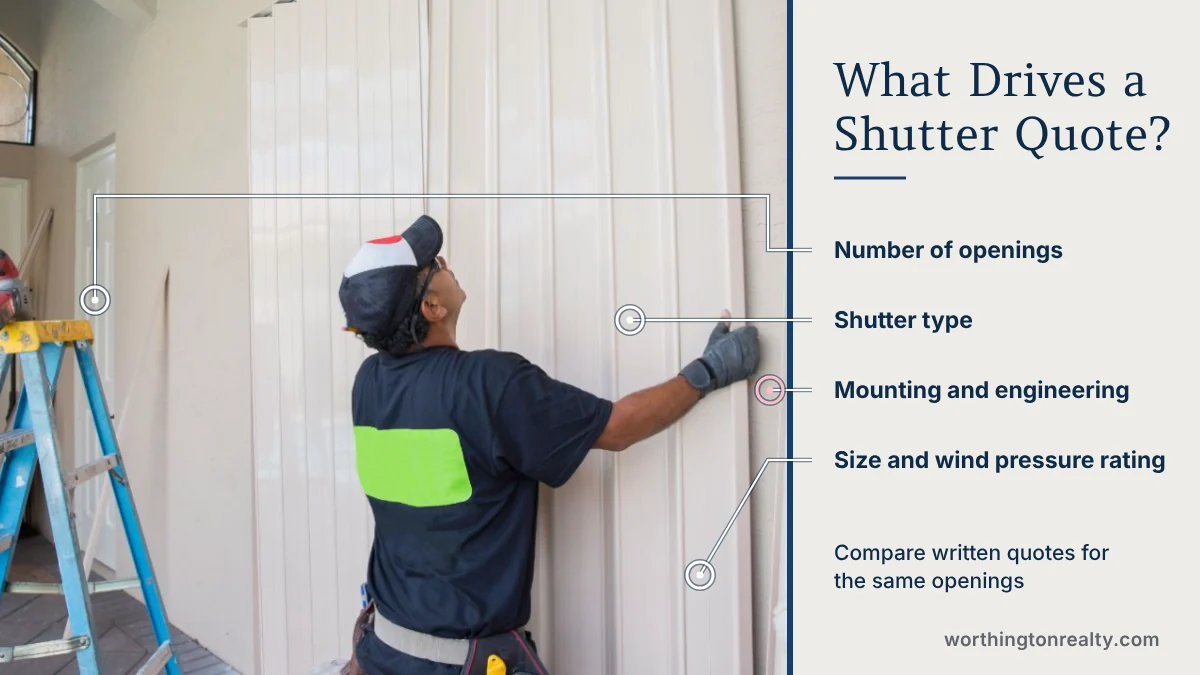
Your home’s openings set the price, so square footage alone won’t tell you much. Two homes the same size can get quite different quotes. These are the things that move the number:
- How many openings need protection, including sliders, entry doors, garage doors and skylights
- The size of each opening and the wind pressure rating it needs, which depends on where the home sits
- The type of shutter, and whether roll-downs are motorized
- What the shutters mount to, such as concrete block or wood frame, and any engineering the permit requires
- Permit fees and the installer’s warranty
To compare fairly, ask at least three licensed installers to quote the same list of openings. Each written quote should name the product and its approval number, list every opening it covers, and say who pulls the permit and schedules the final inspection.
Can I Get Help Paying for Hurricane Protection?
Florida’s My Safe Florida Home program offers free wind mitigation inspections and, for homes that qualify, grants toward upgrades such as impact windows and doors and garage door reinforcement. Funding, eligibility and the list of approved upgrades change. Check your eligibility, confirm that the specific product you’re considering qualifies, and get the program’s grant approval before work begins. The program doesn’t pay for work started before approval.
Permits, HOA Rules and Installation
Closing shutters that are already installed is a homeowner job. Before you install anything, ask the installer how everyone would get out of the home, bedrooms included, while the shutters are closed. Installing new shutters, tracks or anchors generally needs a building permit and an inspection from the city or county where the home sits. Florida lets some owner-builders pull their own permits, so check with your building department before you start.
In an HOA, Florida law requires the association to adopt hurricane protection specifications and generally bars it from denying an installation that meets them (section 720.3035, Florida Statutes). Condo boards must also adopt hurricane protection specifications under Florida law (section 718.113, Florida Statutes). Condo owners should review those specifications and the association’s approval process before installing shutters.
Hire a licensed contractor and check the license with the Florida Department of Business and Professional Regulation or your county’s contractor licensing office. Be wary of anyone who knocks on your door after a storm.
Do Storm Shutters Lower Insurance?
They can. Florida insurers offer credits for features that reduce wind damage, and opening protection is one of them. The amount depends on your insurer and your home. An authorized wind mitigation inspector records these features on Florida’s uniform wind mitigation form, which was updated for inspections starting April 1, 2026 (Citizens notice). The inspection looks at the weakest opening, including windows, doors, skylights and garage doors without qualifying protection, so one unprotected opening can affect the credit. Ask your insurer what it needs before you schedule the inspection.
When Should You Put Up Storm Shutters?
Plan to finish before the wind arrives. The National Hurricane Center typically issues a hurricane watch about 48 hours before tropical-storm-force winds could arrive and a hurricane warning about 36 hours before. Those winds reach the coast well ahead of the storm’s center. Start when your area is threatened, follow local instructions, and finish before tropical-storm-force winds arrive and before any evacuation deadline. Ladders and heavy panels get dangerous as the wind picks up, so don’t wait for a particular wind speed. If your zone is ordered to evacuate, leaving comes first.
Keeping Shutters Ready
- Open and close accordions and roll-downs before each season, and clean the tracks as the manufacturer recommends.
- Check panels, fasteners and anchors for rust, and label each panel for its opening.
- Test the backup operating method on motorized roll-downs, following the manufacturer’s instructions.
- Keep the operating instructions where someone else in the household can find them.
Selling a Home With Storm Shutters
Buyers and their insurers often want to know what protection the home has and whether it was permitted. Before you list, gather:
- Permits and final inspection records for the shutters
- Product approval numbers and the installer’s warranty
- Your most recent wind mitigation report
- Operating instructions, keys and cranks
Having these ready answers questions early in the sale. Our Seller FAQs cover what else to have on hand, and a free home valuation is a good place to start.
Buying or selling in Southwest Florida?
Questions about how storms affect a home you own or want to buy?
Our agents can walk you through permits, insurance records, disclosures and what buyers look for after hurricane season.
An agent will reach out personally within one business day. No pressure, just answers.
FAQs About Storm Shutters in Southwest Florida
Are storm shutters required in Lee and Collier counties?
For new construction, Florida’s building code requires protection for glass openings in the areas it designates for windborne debris, which include much of Southwest Florida. Approved impact glass or approved shutters can meet that requirement. What applies to an existing home depends on its permits and what was installed, so check the home’s records rather than its age. The first statewide code took effect March 1, 2002.
How long do storm shutters last?
It depends on the product, how much salt air it faces and how it’s maintained. Ask each installer for the manufacturer’s warranty in writing, and follow the maintenance schedule in the instructions.
Can I install storm shutters myself?
You can close and secure shutters that are already installed. New shutters, tracks and anchors generally need a permit and an inspection. Florida lets some owner-builders pull their own permits, so check with your city or county building department first.
Do storm shutters lower homeowners insurance in Florida?
They can lower the wind portion of the premium when a wind mitigation inspection documents qualifying protection. The amount depends on your insurer and your home, and an unprotected opening can affect the credit.
Should I get shutters or impact windows?
Impact windows and doors don’t need shutters over them, and they usually cost more per opening. Shutters usually cost less and must be closed before each storm. Many homeowners use both.
Is there help paying for hurricane protection?
Florida’s My Safe Florida Home program offers free wind mitigation inspections and grants for qualifying upgrades. Confirm your eligibility and that the product you want qualifies, and get the program’s approval before any work begins.
Keep reading
More Hurricane Guides
 Flood ProtectionLearn your flood risk, the protection that fits your home and flood insurance basics.
 Generator SafetyRun a portable generator safely and know what a standby unit involves.
 Pool Cage PrepInspect the enclosure, protect the pool and know what to leave to a pro.
 Hurricane DocumentsProtect the records you need for insurance, FEMA and a future sale.
← Back to the Southwest Florida Hurricane Preparedness Guide
Explore the markets
Explore Southwest Florida cities
Live listings, recent sales, and a monthly market update for each area.
 Fort Myers
 Cape Coral
 Estero
 Bonita Springs
 Naples
Still getting to know the area? Start with the regional guide and compare the cities side by side.
Explore Southwest Florida