

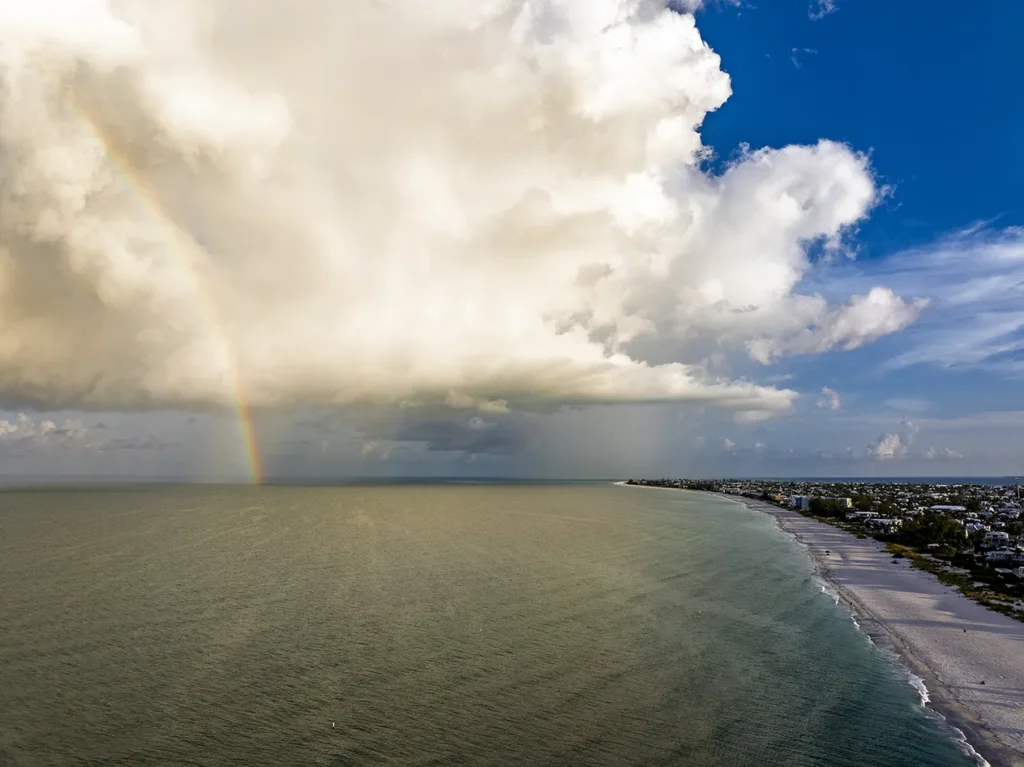
Colorado State University released its first 2026 Atlantic hurricane season forecast this morning, and for Southwest Florida homeowners, the numbers are worth knowing.
Key Takeaways
- CSU is predicting a below-average 2026 Atlantic hurricane season, with 13 named storms, 6 hurricanes, and 2 major hurricanes.
- The expected return of El Niño is the primary reason for the quieter outlook. El Niño creates atmospheric conditions that disrupt storm development before hurricanes can fully organize.
- Below-average does not mean storm-free. CSU’s own data shows favorable forecasts can still produce dangerous seasons.
- The Gulf Coast major hurricane landfall probability sits at 20%, below the historical average.
- Storm preparation is a year-round responsibility in Southwest Florida, regardless of what any forecast says.
2026 Hurricane Season Forecast: CSU’s Numbers
At Worthington, we look at primary sources. The same way we pull MLS data directly rather than relying on what other brokerages report, the numbers below come straight from CSU’s published April 2026 forecast, not from press summaries.
Researchers at Thursday’s National Tropical Weather Conference predicted 13 named storms, 6 hurricanes, and 2 major hurricanes of Category 3 strength or higher for the 2026 Atlantic season. A typical season produces 14 named storms, 7 hurricanes, and 3 majors, so this year’s outlook sits modestly below average. To put that in more concrete terms, CSU is forecasting total seasonal storm activity at roughly 73% of the long-term average, one of the more tangible measures of just how much quieter this season is expected to be.
The primary driver behind the forecast is the anticipated return of El Niño. CSU researcher Phil Klotzbach said the odds of El Niño developing look “very, very high,” with a 61% chance it arrives between May and July, right before the Atlantic reaches its peak activity window.
El Niño increases what meteorologists call vertical wind shear across the Atlantic Basin. Wind shear is essentially the atmosphere tearing a developing storm apart before it can organize into a hurricane. More shear means fewer storms making it to full strength. The European Centre for Medium-Range Weather Forecasts, one of the world’s leading weather models, is currently forecasting wind shear across the area of the Atlantic where most hurricanes form to be the second highest since 1981, trailing only 2015. That is why El Niño matters to homeowners in Fort Myers, Cape Coral, and Naples, not just to researchers in Colorado.
There is a 61% chance El Niño arrives between May and July. By the peak of the season in August through October, NOAA puts that probability even higher, at 80%. For the Gulf Coast specifically, CSU puts the probability of a major hurricane landfall at 20%, below the historical average.
Why a Below-Average Forecast Is Not a Guarantee
Those numbers reflect a quieter-than-average season. They are not a guarantee, and CSU is careful to say so. CSU’s own uncertainty range puts the number of hurricanes anywhere from 4 to 8, meaning an above-average season is still within the realm of possibility.
In 2023, a strong El Niño was in place and CSU issued a nearly identical April forecast. That season still ended as one of the most active in 70 years, as warm ocean temperatures counteracted El Niño’s usual calming influence. Atlantic temperatures this year are presenting mixed signals, with warmer-than-normal water in the western tropics. Sea surface temperatures are the variable forecasters are watching most closely between now and the June update, and that update could look meaningfully different from what we are seeing today.
CSU professor Michael Bell put it plainly: “It takes only one storm near you to make this an active season for you.”
People who live on the Gulf Coast understand that in a way that does not require explanation. One storm is all it takes, and Southwest Florida has learned that lesson more than once. That is not a reason for alarm. It is a reason to stay engaged with the forecast as it develops and to keep your home ready regardless of what any single outlook says.
This is also CSU’s April forecast, their earliest and most uncertain of the year. Updated forecasts follow on June 10, July 8, and August 5. NOAA releases its first official outlook in May.
Why Southwest Florida Is Seeing Early Afternoon Showers in 2026
Here in Southwest Florida, a lot of residents have noticed the afternoon showers arriving earlier than usual this spring. There is a real meteorological explanation for that, and it connects directly to the forecast.
La Niña conditions were still in place at the start of 2026. La Niña tends to keep Florida drier during the dry season months, suppressing the moisture that fuels our afternoon storms. As those conditions fade and neutral patterns take hold, that suppression lifts. Atmospheric moisture increases, and the sea breeze convection that drives a Florida summer can begin firing earlier in the year than we typically expect.
The same atmospheric shift forecasters believe will keep hurricane activity in check this season is also the likely reason your afternoons have felt more like July than April.
How Hurricane Season Affects Southwest Florida Home Values
Hurricane season is part of the Southwest Florida real estate conversation whether we are talking about it or not. It shows up in insurance premiums, in the questions buyers ask, in the decisions sellers make about timing and preparation.
Homeowners who have invested in storm shutters, a generator, or a reinforced pool cage tend to see that reflected when it matters. Buyers who understand the risk picture going in make more confident decisions. Whatever side of that conversation you are on, the forecast is worth factoring in alongside current market conditions.
Fort Myers Beach: A Comeback Story
Anyone who watched what Hurricane Ian did to Fort Myers Beach in September 2022 knows what one storm means to a community. The recovery has been real and ongoing, and Lee County’s recent approval of the new Fort Myers Beach fishing pier is one of the more visible signs that the community is coming back on its own terms. The real estate market there reflects that same momentum, with buyers actively returning to the island. Fort Myers Beach condo sales tell that story in the numbers. Southwest Florida does not look away from storm risk. It prepares, it rebuilds, and it carries on.
How to Prepare Your Southwest Florida Home for Hurricane Season
Most Southwest Florida homeowners understand the importance of storm preparation. The harder truth is that life moves fast and hurricane season always feels just far enough away to deal with later. If that sounds familiar, you are in good company.
The hurricane preparedness guide for Southwest Florida homeowners is the place to start if you want to work through the full picture in one place. A few things are worth pulling to the front of the line.
Pool cages and screen enclosures are something a lot of Southwest Florida homeowners think about once a storm is named and not before. By then the wait for an inspection or repair can stretch for weeks. Pool cage hurricane prep in Southwest Florida is one of those things that rewards doing it on a quiet afternoon rather than an anxious one.
Flooding catches more homeowners off guard than wind does. Our communities sit low and water moves fast. If you have not thought seriously about your flood exposure, your drainage, or whether your insurance actually covers what you think it covers, flood protection for Southwest Florida homeowners is worth your time.
Storm shutters are a decision many homeowners put off until they wish they hadn’t. If you are still on the fence about what makes sense for your home, storm shutters in Southwest Florida lays out the options clearly.
Generators feel like a solved problem until they aren’t. Before you pull yours out of the garage, Southwest Florida generator safety covers what every homeowner should know.
And then there is this. Somewhere on your phone or your computer, or maybe in a filing cabinet you haven’t opened in years, are the documents that would matter most if you ever had to file a claim, evacuate in a hurry, or rebuild from scratch. Insurance policies. Property records. Photos of every room, every appliance, every item of value. A digital backup of your hurricane preparedness documents is the smallest investment on this entire list. It is also the one you would be most grateful for if you ever needed it. Do that one today.
Before you make an offer, check the address’s FEMA flood zone in our flood zone lookup, and check its hurricane evacuation zone separately. Our homeowners insurance guide covers what drives premiums here, and the cost of owning a home calculator puts insurance, taxes and HOA fees together.
Frequently Asked Questions About the 2026 Hurricane Season
CSU is forecasting a modestly below-average season, with 13 named storms and 6 hurricanes compared to a typical season of 14 and 7. The expected return of El Niño is the main reason for the quieter outlook. That said, forecasts at this stage carry real uncertainty and will be updated several times before the season peaks.
El Niño is a periodic shift in Pacific Ocean temperatures that disrupts weather patterns globally. In the Atlantic, it increases wind shear, which breaks apart developing storms before they can strengthen into hurricanes. When El Niño is strong, the Atlantic tends to see fewer and weaker storms.
The Atlantic hurricane season officially runs June 1 through November 30, with peak activity typically occurring between mid-August and mid-October.
La Niña conditions that were suppressing rainfall here have been fading, and neutral patterns are taking over. As atmospheric moisture increases, the afternoon sea breeze storms that are typical of a Florida summer can arrive earlier than usual. It is the same weather pattern shift that forecasters expect to influence hurricane activity this season.
Indirectly, yes. Hurricane risk factors into insurance costs, buyer confidence, and how buyers evaluate properties in coastal markets. Storm preparedness investments tend to hold their value over time. If you have questions about your specific situation, our team is a good place to start.
What Southwest Florida Homeowners Should Know About the 2026 Season
The 2026 forecast is modestly encouraging, driven by conditions forecasters will continue to track and refine through the summer. We live in one of the most beautiful places in the country, and part of living here well is staying ready for whatever a season brings.
If you have questions about what storm preparedness means for your home’s value, your insurance picture, or a decision you are weighing about buying or selling in Southwest Florida, the Worthington team is here to talk.
Wondering what your Southwest Florida home is worth in today’s market?
