

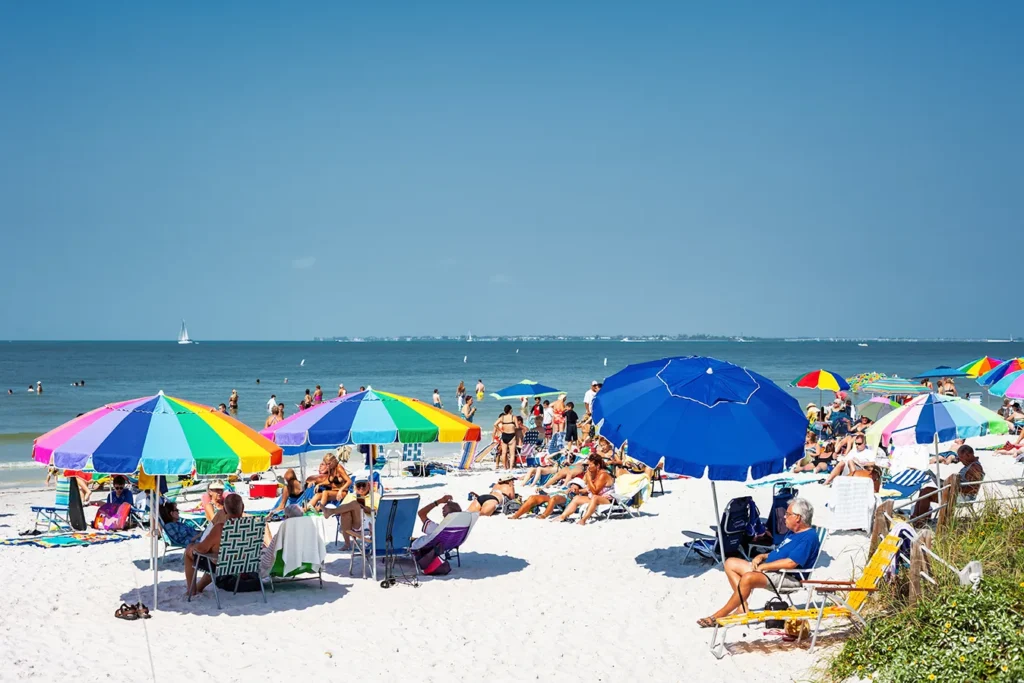
The Same El Niño Forecast That Points to a Calmer Hurricane Season Also Points to Cleaner Coastal Water
NOAA, the federal agency that tracks weather and climate, upgraded El Niño to formal Watch status on May 14. The news has been making headlines. NOAA now puts the odds of El Niño development at 82% by July and 96% by December. In April we asked Is Southwest Florida at Risk for Hurricanes in 2026?, and the answer pointed to El Niño as the central driver of a calmer hurricane season. The same weather pattern that influences hurricanes also shapes Southwest Florida summer beach conditions, and the early indicators for 2026 are favorable.
Key Takeaways
- NOAA upgraded El Niño to formal Watch status on May 14
- Southwest Florida has been in moderate to extreme drought for 7 months
- Lake Okeechobee sits more than 2 feet below its historical May average
- Three converging factors currently point toward calmer coastal water in 2026: a dry watershed, a low lake, and El Niño’s expected suppression of summer storms
Two Different Algae Problems Share One Driver
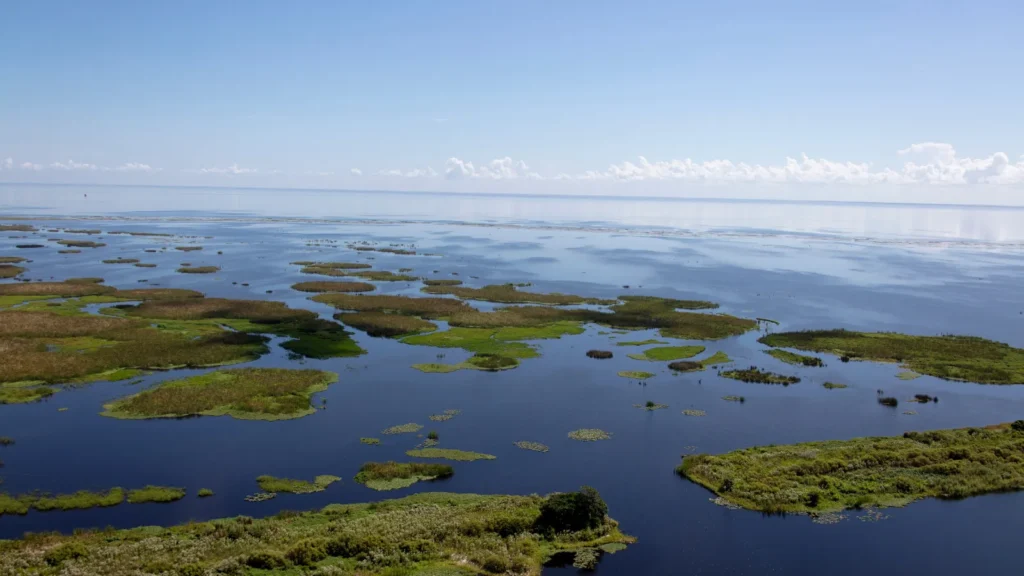
When Southwest Florida residents talk about water quality, two different problems usually come up.
Red tide is the familiar one. A microscopic algae called Karenia brevis blooms in the Gulf of Mexico. The bloom can turn water reddish-brown and produce toxins that kill fish and irritate human lungs. Blue-green algae is a separate problem in our freshwater systems, mainly Lake Okeechobee and the Caloosahatchee River. Cyanobacteria drive these freshwater blooms.
The two problems share a common driver. Red tide forms naturally offshore in the Gulf, then needs nutrients to keep growing as it drifts toward the coast. A 2022 University of Florida study found that nitrogen-rich water flowing from Lake Okeechobee down the Caloosahatchee intensifies red tide blooms. A 2024 follow-up study by the director of the Sarasota Bay Estuary Program and colleagues quantified the effect. Caloosahatchee nitrogen loads explain about 77% of the variation in how long red tide events last along our coast, based on 17 years of data spanning the area between Estero Bay and Sarasota Bay.
The summer outlook for our beaches depends on how much nutrient-rich water reaches the coast from Lake Okeechobee.
El Niño Influences Both Hurricane Activity and Florida Rainfall
El Niño is a Pacific Ocean pattern with global consequences. Worthington’s April 9th piece explained how it suppresses Atlantic hurricane development by increasing wind shear. The same atmospheric setup often, though less reliably, brings reduced summer rainfall to parts of Florida.
Less summer rainfall affects coastal water in two ways. First, fewer hurricane-driven nutrient pulses reach the Gulf, like the ones that contributed to 2017 and 2022. Second, less stormwater carries agricultural nutrients into Lake Okeechobee through the wet season.
Three Conditions Favor Southwest Florida Summer Beach Conditions in 2026
Three measurable conditions matter for the year ahead. All three currently point toward a calmer summer at our beaches, though Florida’s wet season can change the picture quickly.
Drought has kept the watershed dry for 7 months. Southwest Florida has been in moderate to extreme drought since fall 2025, confirmed by the National Weather Service in Tampa Bay. Going back to October 1, our region has received roughly half of normal rainfall. Less rain means less agricultural runoff carrying nutrients into Lake Okeechobee.
Lake Okeechobee is unusually low for May. The lake currently sits more than 2 feet below its historical mid-May average after a deliberate winter drawdown by the Army Corps. Current outflow to the Caloosahatchee at the Franklin Lock is running at just 420 cubic feet per second, well within the normal range.
El Niño is expected to suppress summer storms. El Niño years tend to bring fewer Atlantic hurricanes and often less summer rainfall to Florida. The expected pattern reinforces the same dynamic the drought and low lake are already creating.
Everglades Restoration Is Already Changing the Picture
We recently had the chance to hear former Florida Governor Jeb Bush speak at the Edison Awards here in Fort Myers. He spoke about the Comprehensive Everglades Restoration Plan, the largest ecosystem restoration project in the world. The plan was authorized by Congress in 2000 and signed into law by President Bill Clinton. Bush was at the signing ceremony representing Florida as the lead state partner. CERP’s 68 project components are designed to restore the natural southward flow of water through the Everglades. Decades of canals had disrupted that flow, sending Lake Okeechobee water east and west to the estuaries instead. For Southwest Florida, that means reducing the polluted discharges that travel down the Caloosahatchee toward our coast. Hearing Bush describe how much progress has accelerated recently was a reminder of just how significant this work is.
Earlier restoration work is paying off. The Kissimmee River Restoration Project, a related federal-state effort completed in 2021, restored 44 miles of river and thousands of acres of surrounding wetlands north of Lake Okeechobee. The restored floodplain now filters nutrients before they reach the lake. Scientists report it is already limiting the size of algae blooms there. The Everglades Agricultural Area Reservoir, one of CERP’s main components, is the next major piece. It will redirect Lake Okeechobee water south through the Everglades instead of west down the Caloosahatchee. The project is scheduled for completion in 2029. When finished, it will store 78 billion gallons of water and deliver clean water south rather than to our estuaries.
Conditions right now are why 2026 looks favorable. Restoration is why the next decade should look better too. Each new piece of the Everglades restoration sends more water south and less water west toward our coast. That is how Southwest Florida gets more months of clear water, healthy beaches, and the coastal life that brings people here in the first place.
What We’ll Be Watching Through Summer
By late July or August, three indicators should tell us whether the favorable pattern is holding.
The first is rainfall. Southwest Florida is still unusually dry for mid-May, and a slower start to the wet season reduces pressure on the regional water system.
The second is Lake Okeechobee’s level. A lake that stays near or below its historical seasonal average gives water managers more flexibility during summer storms.
The third is discharge at the Franklin Lock on the Caloosahatchee. Sustained flows below 2,100 cubic feet per second generally indicate the estuary is staying in balance.
Frequently Asked Questions
Current indicators point to a calmer year than 2018, 2022, or 2023. The winter was dry, Lake Okeechobee is low, and El Niño is expected to suppress summer storms. The starting position is unusually favorable.
A microscopic algae called Karenia brevis, which lives in the Gulf of Mexico and blooms naturally, causes red tide. Blue-green algae is a freshwater problem caused by cyanobacteria, mainly in Lake Okeechobee. Both worsen when nutrient-rich water flows from agricultural watersheds through Lake Okeechobee and the Caloosahatchee into the Gulf.
Less rainfall means less stormwater carrying agricultural nutrients into Lake Okeechobee, which keeps the lake lower. A lower lake means less pressure on the Army Corps to discharge large volumes of nutrient-rich water down the Caloosahatchee toward our coast.
By late July or early August. May and June rainfall, Lake Okeechobee’s water level, and Caloosahatchee discharge patterns will tell us most of what we need to know.
Southwest Florida’s 2026 Beach Outlook Is the Most Favorable in Years
The early forecast for our coastal water is more favorable than it has been in several years. We will be tracking the variables that matter through summer and updating our readers as the season develops.
If you have questions about how this affects your specific neighborhood or a property decision you are weighing, the Worthington team is here to talk.
